Monday, March 10, 2025

MMGM: Philip Reeve: Master of Historical Fantasy and Steampunk

It's so refreshing when I encounter a historical book that is true to the time and accessible for kids. Bonus points if it’s also humorous.

Recently, my younger son, who still loves middle grade fiction, discovered Phillip Reeve. First, we read the Larklight series, a Victorian steampunk/alternative history set in space. Next, we tackled a stand alone novel by Reeve, No Such Thing as Dragons. Although these books are completely different, they both remain authentic to their time periods with interesting characters that kids will relate to. In the case of Larklight, especially, they are also laugh out loud funny.


Larklight

Arthur (Art) Mumby and his irritating sister Myrtle live with their father in the huge and rambling house, Larklight, travelling through space on a remote orbit far beyond the Moon. One ordinary sort of morning they receive a correspondence informing them that a gentleman is on his way to visit, a Mr Webster. Visitors to Larklight are rare if not unique, and a frenzy of preparation ensues. But it is entirely the wrong sort of preparation, as they discover when their guest arrives, and a Dreadful and Terrifying (and Marvellous) adventure begins. It takes them to the furthest reaches of Known Space, where they must battle the evil First Ones in a desperate attempt to save each other - and the Universe.

Recounted through the eyes of Art himself, Larklight is sumptuously designed and illustrated throughout.

(from Amazon)


Starcross (the sequel)

There is an old saying: if something is too good to be true, it probably is. Take the holiday that Art Mumby, his irritating younger sister Myrtle, and their mother take to Starcross, the finest sea-bathing resort in the entire Asteroid Belt. The fact that there are no seas anywhere should give you a clue. Sure enough, Art and family quickly find themselves grappling with French spies, Yankee rebels, and man-eating starfish. With stops to the future and prehistoric Mars, it's all Art can do to keep his head about him - which is essential, since everyone else is losing theirs!

(from Amazon)

My take:

Reeve's voice is spot with the tongue-in-cheek Victorian humor. Most of the chapters are from Art's point of view, but we get chapters from Myrtle’s diaries as well. While some people (like Art) find Myrtle annoying, I thought she was a hoot, always trying to be a proper Victorian lady. You don’t want to miss the part in Starcross where her extravagant Victorian bathing costume comes in handy or her "attachment" with pirate Jack, who has his own interesting back story. The Author/Illustrator bio at the end about “Two Gentlemen of Devonshire" is as entertaining as the rest of the book. The best part, of course, is the incredibly intricate and imaginative world with Britain is leading the space race in the Victorian times. I enjoyed traveling to Venus and Jupiter and all the incredible creatures and technology Reeve created. Whether you are encountering enormous spiders or sentient hats that control people's mind, this whole series is a lot of fun.

*There is a third book, Mothstorm, but I haven't read it yet. 

If you love steampunk or alternate fantasy that doesn't take itself too seriously, you will love this. The world building reminded me of a kid's version of Jasper Fforde's work. (The Eyre Affair)

No Such Thing As Dragons


A thrilling new adventure from award-winning master storyteller Philip Reeve!

Ansel is a mute boy whose master is a dragon-slayer. Brock has shining armor, and scars that prove his heroic stories. Ansel suspects there are no such things as dragons. So what is the man-eating monster that haunts the crags of Dragon Mountain? (from Amazon)

My Take:

This book was much different from the Larklight series. There is still some humor, but this read more like a straight historical in the setting and details. What I loved about it is how authentic and grounded the world was. Although the setting is never explicitly stated,  it felt like somewhere in Northern Europe during the Middle Ages.  The beliefs of the villagers about dragons felt authentic and true to the time period. Although this is a short book, it has very realistic violence in parts, so it’s not for the more sensitive reader. Reeve includes a lot of perspectives on dragons but doesn’t force the reader to come to a certain conclusion. I also enjoyed the bit of humor, especially at the end, with Brock, the dragon slayer.

If you enjoy realistic historical fiction with a dose of fantasy, you will enjoy this.

Max’s Take (on a five bone 🦴scale):

The Larklight Series:

🦴Giant spiders and hats that take over your brain! This was funny, but you know I don't like bugs.

No Such Thing as Dragons

🦴 A really cool dragon, but he was scary. Big claws and teeth. And he eats cows! You really need to choose books with nice animals.


If you'd like to read more middle grade reviews or join in the MMGM fun, go to Greg Pattridge's Always in the Middle blog.

Your Turn:

Have you read anything by Philip Reeve? Do you like alternate history, steampunk, or historical fantasy? What are your favorites?


Wednesday, March 5, 2025

ISWG: Are you a Storyteller or a Wordsmith?


What type of writer are you? Recently a freelance editor commented in her newsletter that most authors she works with are good storytellers but not good writers. By good writer, she means someone good with words or grammar, which I like to call a wordsmith.

Storyteller (my definition): Someone whose strengths lie in plotting and telling the story. People who are good storytellers often have studied film or read a lot of plot-driven fiction.

I am the opposite, or at least, I think. I struggle with plotting and despite using every craft book with its fill-in-the-blank beats, it never gets easier for me. Critique partners tell me I’m good at big picture stuff, but I can only see it in other people’s work.

Wordsmith (my definition): Someone who’s good with words, grammar, and loves to play with language. People who are wordsmiths tend to read a lot, especially literary-type fiction.

Am I a wordsmith?

I love finding the “just right” word for a sentence. I love using motifs and metaphors. But like with storytelling, I usually catch grammar errors in other people’s work but struggle to find those in my own writing. 


In Novel Metamorphosis, Darcy Pattison says there are four stages of learning (p. 5):

Unconscious Incompetence: You’re completely unaware that you can’t do something.


Conscious Incompetence: You're aware of not knowing a skill, but don’t know how to fix it.


Conscious Competence: You are consciously working on skills.


Unconscious Competence: You have internalized the skill and don’t think about it.

Maybe we don’t know yet what we still need to work on. I make a conscious effort on checking grammar and plot holes. But voice and character come easier for me.Voice was something I once struggled with, so maybe I’ve moved up the ladder on that one.

Often what readers or critique partners enjoy about your work are those unconscious competencies. 

I’ve also learned that it’s important to learn to lean into my strengths and get help with the things I struggle with. Like I never send out my work now unless I’ve read it out loud multiple times.

What about you? Is telling the story or playing with words your thing? How do you overcome your weak side?

*Photo by hannah grace on Unsplash

If you'd like to read more ISWG posts or sign up, please go HERE. You won't be disappointed.


Monday, February 24, 2025

All Creatures Great and Small Shows People Still Love Quiet Stories


All Creatures Movie Poster from pbs.org

Every time I attend a webinar about what readers are buying now, it is discouraging. For a writer (like me) who has just written a contemporary, quieter story, the news is never good.


Horror is "having a moment" right now, perhaps due to its popularity in movies. Or some say that scary stories are popular because they are a safe way for kids to deal with their fears and anxiety. 


May I present another choice? One that won’t give kids more things to be afraid of.


My family loves All Creatures Great and Small. Season six starts this weekend, which must mean someone likes it and not just us.


Nothing of significance happens in the show. The stakes are low. Usually there’s a problem with an animal or personal relationship that is resolved by the end of the episode. James and Helen—a married couple on the show—get along and work as a team. It seems a given that no important characters will die.


                                             All Creatures Great and Small Season 6 Preview from pbs.org


Last year, I was inspired by a post on Facebook by Karen Andreola, author of the novel, Michael’s Gentle Wife and nonfiction books about homeschooling.


She talked about having a glimmer of sunshine in your stories instead of filling it with things that might trigger your reader.


If you do add those glimmers of goodness, she says, you might have to write outside the norm.
It seems every writing book I’ve read says, “Make it darker, darker, darker.” That’s what makes people turn the page. It’s like watching a car accident on repeat.


Is that the only thing that makes people turn the page?


I’m not saying that all books or stories need to be quiet, because I also enjoy fantasy and mysteries. But if you are a reader who likes quiet, everyday stories, remember that there is a long legacy of popular books in this genre, especially for children and teens. And hopefully, there will still be people who write them.

Books that people come back to again and again. Because they feel like friends.

Here are a few of my favorite quiet reads, both old and new:


Anything by Kate diCamillo, but especially The Three Rancheros Series


Anne of Green Gables (of course!)


Nancy Cavanaugh's books


Maud Lovelace (Although I love her Betsy, Tacy series, Emily of Deep Valley is my favorite.)


The Penderwicks
series by Jeanne Birdsall


The Vanderbeekers series by Karina Van Glaser

Wonderland by Barbara O'Connor


Your Turn:

Are you drawn to more quiet stories or action-packed or does it depend on your mood? What types of books would you like to see more of? Do you have any quiet books you love? I'm always looking for new gems!


I am an Amazon affiliate. If you purchase a book from a link, I receive a small commission at no cost to you. Thank you for your support!


Monday, February 17, 2025

MMGM: 90s Gems: The First State of Being and The Kid Who Ran for President


What’s not to love about the 90s? A return to more subdued hair styles and clothing after the over-the-top styles of the 80s. (I’m looking at you, Wall-a-Bangs.) Great music. And some of my favorite movies of all time. 


When I read the premise for this year’s Newberry winner, The First State of Being by Erin Entrada Kelly (Time travel during Y2K!), I had to check it out. Also, I recently read a book written during the 90s, The Kid Who Ran for President by Dan Gutman. The Homework Machine was a huge hit at my house when my kids were in middle graders, and Gutman did not disappoint on the humor.


Although these books couldn’t be more different, they are both thought-provoking reads.  If you’re love time travel, are nostalgic for the 90s, or you like funny books about class clowns running for president, check either of these out.


The First State of Being by Erin Entrada Kelly


When twelve-year-old Michael Rosario meets a mysterious boy from the future, his life is changed forever. From bestselling author Erin Entrada Kelly, also the winner of the Newbery Medal for Hello, Universe and a Newbery Honor for We Dream of Space, this novel explores themes of family, friendship, trust, and forgiveness. The First State of Being is for fans of Rebecca Stead’s When You Reach Me.


It's August 1999. For twelve-year-old Michael Rosario, life at Fox Run Apartments in Red Knot, Delaware, is as ordinary as ever—except for the looming Y2K crisis and his overwhelming crush on his sixteen-year-old babysitter, Gibby. But when a disoriented teenage boy named Ridge appears out of nowhere, Michael discovers there is more to life than stockpiling supplies and pining over Gibby.


It turns out that Ridge is carefree, confident, and bold, things Michael wishes he could be. Unlike Michael, however, Ridge isn’t where he belongs. When Ridge reveals that he’s the world’s first time traveler, Michael and Gibby are stunned but curious. As Ridge immerses himself in 1999—fascinated by microwaves, basketballs, and malls—Michael discovers that his new friend has a book that outlines the events of the next twenty years, and his curiosity morphs into something else: focused determination. Michael wants—no, needs—to get his hands on that book. How else can he prepare for the future? But how far is he willing to go to get it?


A story of time travel, friendship, found family, and first loves, this thematically rich novel is distinguished by its voice, character development, setting, and exploration of the issues that resonate with middle grade readers.


Finalist for the National Book Award and Winner of the Newbery Medal.(From Amazon)


My Take:

This book definitely deserves all the praise it got. It does remind me of When You Reach Me, but has its own twists on time travel, including using documents, audio recordings, and manuals from the future time and a different take on the whole butterfly paradox. I also liked how Kelly portrayed poverty in a realistic way and showed there can be still be love and joy in a family whatever its circumstances. Michael (not Mike) was a great main character. His loyalty and care for his mama, his desire to be older than he was, and his curiosity about the world won me over from the start. I loved how Michael learned about being thankful and grateful for the moment he’s living in, and that we can’t control the future.


The Kid Who Ran for President by Dan Gutman


Bestselling author Dan Gutman's sharp, funny farce about the youngest candidate to ever run for President of the United States!


""Hi! My name is Judson Moon. I'm twelve years old and I'm running for President of the YOU-nited States."That's how I introduced myself to about a zillion people. I must have kissed a zillion babies, said a zillion hellos, shaken a zillion hands . . . Will I get a zillion votes? The answer might surprise you.Can you picture a kid as President? Imagine what we can accomplish -- together -- in a country where parents listen. Where teachers give no homework. Where every lawmaker obeys a single kid -- me! How am I going to pull this off? Who knows! Read the book to find out." (from Amazon)


My Take:

This book requires a huge suspension of disbelief. It reminded me of School Story by Andrew Clements, which chronicles a kid getting a publishing contract. Like that book, there were a lot of things that couldn’t possibly happen. But if you don’t take it too seriously, this book is super fun. Judson Moon is the kid I wouldn't want to have in class, but was so fun to read about. I really enjoyed the contrast between his easy-going, careless attitude and his serious campaign manager. His character arc is very rewarding. There were too many funny moments to count, and it'd make for great discussion for studying President’s Day (today!) or during Election Season in the classroom or homeschool.

Max’s Take (on a five bone 🦴scale):

The First State of Being:

🦴More cats! I can't believe you picked another cat book. C'mon! What's with the focus on the future? I live in the eternal now.

The Kid Who Ran for President:

🦴 🦴 🦴There was a bird, Snot, renamed Cuddles for the campaign. He sounded tasty! Plus, this was really funny.


 If you'd like to read more middle grade reviews or join in the MMGM fun, go to Greg Pattridge's Always in the Middle blog.

Your Turn:

Have you read either of these books? What is your favorite thing from the 90s? If you could time travel, where would you go?


Monday, February 10, 2025

MMGM: Sweet Reads for Middle Schoolers

In honor of Valentine’s Day this week, I’m featuring a couple of MG books with love themes. Honestly, I don’t usually like to see too much romance for the middle grade set, but both these books handle crushes and flutterings of interest in the other sex with charm and grace. And if you’re thinking it’s all about boyfriend/girlfriends, you’d be wrong.

Both books are coincidentally by a new small publisher I discovered last year, Owl’s Nest Books.  Their philosophy is summed up on their website: “Owl’s Nest Publishers books are good, true, and beautiful reflections of the adolescent experience.”

Both these books are wonderful reflections of those awkward teen years and learning what true love really means.


Not Exactly Love by Devin Brown

Thirteen-year-old Leda Johnson suffers from a secret and severe case of semi-requited love—meaning she has a friend who is a boy but not her boyfriend, but she wishes he was. With “Rolling and Rocking,” St. Luke’s first annual Valentine’s Day roller skating party, rapidly approaching, Leda wonders what will come of her unspoken dream and the mysterious cat that has suddenly appeared on their deck. (From Owl’s Nest)

My Take:

This was my first introduction to Owl’s Nest. A friend suggested I read this since I am writing an epistolary novel as Not Exactly Love is told in letters to Leda's diary. At first it was a little hard to get into, and I was unsure if I’d like a book for MG where the main plot was all about a crush. But there are some wonderful layers to this novel, and I really loved how Leda discovered the real meaning of love—caring for others more than yourself—by the end. Leda attends a private Episcopal school, so they are subtle faith messages woven throughout. And there was the sweet subplot with the cat! Sometimes the ending makes the whole book, and this ending hit all the right notes. I wished I had a book like this when I was a middle schooler!


Peony Watercolor’s Wish for Sun and Moon by Robyn Field

Twelve-year-old Peony Watercolor is keeping a secret from her two best friends: Her parents are out of work, and they might have to sell their beloved, story-filled Reading House, pack everything into ugly brown boxes, and move to a different state.


Peony will do anything to save her family’s Reading House, so when Hollyfield Middle School announces that the talent show’s grand prize is $1,000, she signs up, determined to win. While she thinks a cash prize will save her, the school’s mysterious new librarian, Lenora, seems to have other ideas. Lenora gives Peony a magic book that might know Peony better than Peony knows herself—a book that contains stories, recipes, poems, and instructions to guide Peony and hold her together while the rest of her world falls apart.


When the fraying threads of Peony’s home life, secrets, and the talent show finally begin to unravel, she must uncover the meaning of the magical book or risk losing not only the Reading House, but also the friendships she loves most.
(From Owl’s Nest)

My Take:

Ah this book! Every word is magical. I loved the Cinderella elements, and the warm relationship between Peony and her parents. Her friendship with her two besties—and the newcomer at school—were so real and authentic. You know I love seeing strong girl friendships, as it is rare in kidlit. The romance with her Prince Charming was cute and sweet—and of course, they get to go to a ball (a.k.a. middle school dance). But my favorite part of this book was how Field portrayed lying. It’s so common in kidlt for a character to lie as a means to an end. But with Peony, her lies have consequences. It hurts her and drives her from those who love her most. This theme of the importance of reaching out and relying on our friends during hard times was really lovely!

Max’s Take (on a five bone 🦴scale):

Not Exactly Love:

🦴There was a cat! How could you even pick up a book like that? The betrayal! More dogs, please.

Peony Watercolor:

🦴 No animals at all. Too many people. Where is the love?

Hopefully next week's read will be more to Max's taste. 

Your Turn:

What have you been reading or watching lately? Any sweet reads or movies on your list this week? 

I hope your week is filled with the people and things you love!


 If you'd like to read more middle grade reviews or join in the MMGM fun, go to Greg Pattridge's Always in the Middle blog.


Wednesday, February 5, 2025

#ISWG: Should You Revise or Rewrite?

Photo by Annie Spratt on Unsplash

Personal Update

I know it’s been a long time (2 years!) since I posted. Ack! Well, although 2023 was a challenging year, it did lead to me being able to step down from my teaching position in 2024. Although I do miss my students and wonderful colleagues, I am so enjoying having more brain space for writing. My mind is exploding with ideas!

I’m so happy to be back, and God willing, I will be posting regularly again in this space more consistently.

To revise or rewrite?

Years ago, I attended a conference where a best-selling author made a bold statement. “I never revise.” He said revising makes writing lose its freshness.

At the time, the comment confused me. How could you not edit your writing? It wasn’t till much later that I realized what he meant. It wasn’t that he didn’t change his writing before submitting to his publisher. He just meant that he rewrote scenes rather than just edit what was already there.

I’ve thought about this comment a lot lately. Last fall I read a new craft book Refuse to Be Done by Matt Bell. He said something similar: “When in doubt, rewrite instead of revise.” (93)  He suggested for the second draft of your book to rewrite it from scratch, but use the first draft as a starting point.


Wow, I thought at the time. I couldn’t do that. But after more thought, I realized that that’s exactly what my current WIP needed. I’d been spinning in circles and moving words around for at least a year. Based on some feedback I knew I needed to make major revisions—and I couldn’t easily do that just by revising.

So, I’m currently rewriting the whole thing. And I’m loving it. Mostly. It’s not like drafting the first time, where I feel like I’m going about blindfolded, feeling my way to the end of the story. This time I know my story and characters well. Which I guess, however you do it (rewriting or revising), is the key.

Maybe rewriting isn't for every writer or even every manuscript. But it’s the best thing I’ve ever done for this one.

This month's question: Is there a story or book you've written that you wished you could go back and change? Oops! I didn't really answer that question. I wouldn't change any of my published work. For me, it's out there and out of my head.

But my works-in-progress? I can keep redoing as much as I want.

How about you? Do you rewrite or revise?

Or does it depend on the story?

Do you want to change any of your books/stories?

If you'd like to read more ISWG posts or sign up, please go HERE. You won't be disappointed.


Wednesday, December 7, 2022

#ISWG: What I've Learned Lately + December Question

 
Photo by Annie Spratt on Unsplash

December Question: Are the holidays a time to catch up or fall behind on writing goals?

I do write more over the holidays usually because I’m a teacher, so those two weeks off are golden. But there are also a lot of family activities and events, so I often don’t get as much done as I’d like. So far, I haven’t been getting as much writing done this month, but Winter Break is coming.


Making Mistakes

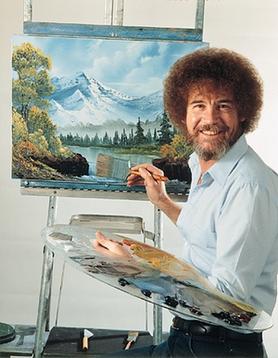
https://upload.wikimedia.org/wikipedia/en/7/70/Bob_at_Easel.jpg
from Bob Ross Incorporated

My husband recently asked me, “What if writers saw their mistakes as happy accidents?”
I’ve been also thinking of how I approach my other artistic pursuits. I crossed a huge hurdle with painting when I told myself, “I will make a mistake with this project. But that can be fixed (or made part of the painting).” What if we did that with writing? I’m doing that right now by writing in longhand first. It’s allowed me to treat this draft as a practice run, and that’s helped me deal with my perfectionist tendencies. 


Writing from the Heart


I'm currently reading A Swim in a Pond in the Rain: In Which Four Russians Give a Master Class on Writing, Reading, and Life, which is amazing. I really liked Saunder’s commentary about Turgenev’s "Singers." This story is about a singing contest where a technically correct singer loses to the singer who sings imperfectly but with soul. Saunders talks about how this story gave him insight into his own writing. For a long time, he wanted to be a “classic” writer and write “important” stories. Then he caught his wife laughing at a funny poem he’d written. He realized that maybe he wasn’t the next Hemingway, but more like Dr. Seuss. This made me think about my own writing. Am I trying too hard to be like one of my writing idols? Or am I writing what is in my heart, even if it doesn’t seem as great or important?


It’s okay to say no.

This year I’ve taken on an extra position at work where I mentor other teachers. I love this, but one problem is sometimes I’m so busy helping other people that I neglect my own teaching and planning! With writing, I often get so busy with helping other people or doing social writing stuff (conferences, webinars, etc.) that I don’t actually write. I’m learning it’s okay to say no, to put that oxygen mask on, so to speak, so I can get my own writing done. I’ve stepped back from critiquing at least for a season. And that’s allowed me to put more energy into my own stuff.


What about you? Do you write more or less during the busy holiday season? What is helping you this month with your writing?

Wishing all of you a lovely holiday season!

If you'd like to read more ISWG posts or sign up, please go HERE. You won't be disappointed.