Showing posts with label What I Learned. Show all posts

Wednesday, June 4, 2025

ISWG: What I've Learned from My Favorite Childhood Authors

Often, I get asked by other writers why I write for kids. My standard answer is that deep down I still feel twelve (or sixteen if the YA mood strikes me). Seriously, my best ideas are often based on my own or my sons’ childhood experiences. 

As Flannery O’Connor said, “Anybody who has survived his childhood has enough information about life to last him the rest of his days.”

This month’s question was relatively easy for me. These are books that not only impacted me as a person, but as a writer. When I think about what kind of writer I want to be, I think of a long list of authors who wrote so well for children that I still feel like these characters are my best friends. These are just some highlights.

What I learned from my childhood friends books:


Description/Characters

Description has always been a challenge for me. My drafts are usually very sparse, just dialogue, action, and inner thoughts. I usually add description as layers in later drafts. But maybe because it doesn’t come naturally to me, I love reading authors who do lush description well. And many older books do. 


What I learned from Wilder and Mongomery and Lovelace:

  • People will stay with a well-rounded interesting character, even if there’s not a lot of action.
  • Everyday life is beautiful and full of drama and joy.
  • To capture characters and description well, pay attention to the people around you.
  • Women from the past wanted to be writers too!

Humor


I went through a serious Roald Dahl kick as a child. I loved his smarter-than-the-adults characters, and I delighted in how the awful adults always got their comeuppance. Recently, I got to see Willy Wonka the musical, and it brought back so many fond memories. Writing humorously is something I’ve had to work on, but it comes more naturally as I learn to take myself less seriously.


What I learned from Roald Dahl:

  • Humor points out the truth but in a subtle way.
  • It appeals to kids.
 

Imagination/Fantasy:


I loved the Narnia series as a kid, but I thought I didn't like other fantasy until I started writing it. My biggest struggle with fantasy is world-building and internal logic. My first attempt at a novel was a portal fantasy, and although it is littered with issues, I still want to go back and revise it. And then because of Gail Carson Levine, I have a soft spot for fairy tale re-imaginings. Someday!
 

 What I learned from C.S. Lewis and Gail Carson Levine (whom I discovered as adult):

  • I like fantasy grounded in reality.
  • Fantasy can be a portal (pun intended!) for teaching truth about the real world/life.
  • The best fantasies have incredible characters, world-building, and all the other elements of a good novel.


What about you? What books inspired you as a child or a teen? 

If you'd like to read more ISWG posts or sign up, please go HERE. You won't be disappointed.


Wednesday, February 5, 2025

#ISWG: Should You Revise or Rewrite?

Photo by Annie Spratt on Unsplash

Personal Update

I know it’s been a long time (2 years!) since I posted. Ack! Well, although 2023 was a challenging year, it did lead to me being able to step down from my teaching position in 2024. Although I do miss my students and wonderful colleagues, I am so enjoying having more brain space for writing. My mind is exploding with ideas!

I’m so happy to be back, and God willing, I will be posting regularly again in this space more consistently.

To revise or rewrite?

Years ago, I attended a conference where a best-selling author made a bold statement. “I never revise.” He said revising makes writing lose its freshness.

At the time, the comment confused me. How could you not edit your writing? It wasn’t till much later that I realized what he meant. It wasn’t that he didn’t change his writing before submitting to his publisher. He just meant that he rewrote scenes rather than just edit what was already there.

I’ve thought about this comment a lot lately. Last fall I read a new craft book Refuse to Be Done by Matt Bell. He said something similar: “When in doubt, rewrite instead of revise.” (93)  He suggested for the second draft of your book to rewrite it from scratch, but use the first draft as a starting point.


Wow, I thought at the time. I couldn’t do that. But after more thought, I realized that that’s exactly what my current WIP needed. I’d been spinning in circles and moving words around for at least a year. Based on some feedback I knew I needed to make major revisions—and I couldn’t easily do that just by revising.

So, I’m currently rewriting the whole thing. And I’m loving it. Mostly. It’s not like drafting the first time, where I feel like I’m going about blindfolded, feeling my way to the end of the story. This time I know my story and characters well. Which I guess, however you do it (rewriting or revising), is the key.

Maybe rewriting isn't for every writer or even every manuscript. But it’s the best thing I’ve ever done for this one.

This month's question: Is there a story or book you've written that you wished you could go back and change? Oops! I didn't really answer that question. I wouldn't change any of my published work. For me, it's out there and out of my head.

But my works-in-progress? I can keep redoing as much as I want.

How about you? Do you rewrite or revise?

Or does it depend on the story?

Do you want to change any of your books/stories?

If you'd like to read more ISWG posts or sign up, please go HERE. You won't be disappointed.


Wednesday, December 7, 2022

#ISWG: What I've Learned Lately + December Question

 
Photo by Annie Spratt on Unsplash

December Question: Are the holidays a time to catch up or fall behind on writing goals?

I do write more over the holidays usually because I’m a teacher, so those two weeks off are golden. But there are also a lot of family activities and events, so I often don’t get as much done as I’d like. So far, I haven’t been getting as much writing done this month, but Winter Break is coming.


Making Mistakes

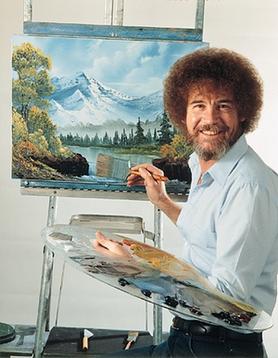
https://upload.wikimedia.org/wikipedia/en/7/70/Bob_at_Easel.jpg
from Bob Ross Incorporated

My husband recently asked me, “What if writers saw their mistakes as happy accidents?”
I’ve been also thinking of how I approach my other artistic pursuits. I crossed a huge hurdle with painting when I told myself, “I will make a mistake with this project. But that can be fixed (or made part of the painting).” What if we did that with writing? I’m doing that right now by writing in longhand first. It’s allowed me to treat this draft as a practice run, and that’s helped me deal with my perfectionist tendencies. 


Writing from the Heart


I'm currently reading A Swim in a Pond in the Rain: In Which Four Russians Give a Master Class on Writing, Reading, and Life, which is amazing. I really liked Saunder’s commentary about Turgenev’s "Singers." This story is about a singing contest where a technically correct singer loses to the singer who sings imperfectly but with soul. Saunders talks about how this story gave him insight into his own writing. For a long time, he wanted to be a “classic” writer and write “important” stories. Then he caught his wife laughing at a funny poem he’d written. He realized that maybe he wasn’t the next Hemingway, but more like Dr. Seuss. This made me think about my own writing. Am I trying too hard to be like one of my writing idols? Or am I writing what is in my heart, even if it doesn’t seem as great or important?


It’s okay to say no.

This year I’ve taken on an extra position at work where I mentor other teachers. I love this, but one problem is sometimes I’m so busy helping other people that I neglect my own teaching and planning! With writing, I often get so busy with helping other people or doing social writing stuff (conferences, webinars, etc.) that I don’t actually write. I’m learning it’s okay to say no, to put that oxygen mask on, so to speak, so I can get my own writing done. I’ve stepped back from critiquing at least for a season. And that’s allowed me to put more energy into my own stuff.


What about you? Do you write more or less during the busy holiday season? What is helping you this month with your writing?

Wishing all of you a lovely holiday season!

If you'd like to read more ISWG posts or sign up, please go HERE. You won't be disappointed.


Wednesday, October 5, 2022

#ISWG: Finding Time to Write


Photo by Carli Jeen on Unsplash
 

I’m having a hard time figuring out what to write this month.
 

I read so widely, that it’s hard for me to pick a genre for this month’s question.
 

But I’ve had a win lately. After years of struggling to find time to write, especially since I returned to work full-time, I found a solution.

1.  I write in the mornings before work. I set the bar really low for myself. I try to get up a half hour earlier than normal. It's been working. I don’t write every day, but I write most days.

2.  For my morning writing sessions, I handwrite. I draft and brainstorm ideas in a notebook. I’m not sure what I’ll do when I’m finished with the rough draft and move on to editing, but I’m thinking about printing off my chapters and editing in longhand as well.

    Why longhand? I find it hard to add any more computer time to my day. And I can write a couple pages long-hand in 15 minutes, but I’m not able to do that typing. I also find I feel more willing to experiment when I can cross something off. Typing is different. It feels permanent and harder for me to change—or take risks.

3.  On the weekends, I input whatever I wrote during the week into my computer. I do some light editing, but I’m not going crazy since it’s a rough draft.

4.  Another thing I’m trying, since I’ve set aside too many writing projects lately, is that I’m keeping this one a secret. I haven’t even talked to my family about it, which is unusual for me. I have learned that both criticism and praise can kill my momentum.

5.  I am gentle with myself. Some days I’m too tired to write. Some days the words just don’t come, and I write notes or read a book instead. That’s okay. The road to creating anything, especially writing, is never straight.
    

Aside from actually getting some writing done, a few of the fringe benefits:

1.  I’m happier. I have a job that’s a giving type job and a family. It’s easy for me to feel burnt out sometimes. But getting even 15 minutes to jot down part of a scene or some ideas makes me feel like I still have a life outside of being a teacher and a mom.

2.  No more excuses. I’d become really good at coming up with reasons for why I wasn't writing regularly. Now I feel so empowered. I can do this—even if it’s just a few pages at a time.
    

    Yes, I’m still battling insecurities. My feelings about this project go up and down from day to day or minute by minute. Like always.

    But I finally feel like a real writer again. And that, my friends, is priceless.

    What about you? How do you find time to write in your busy schedule (because we’re all juggling a million things)?

If you'd like to read more ISWG posts or sign up, please go HERE. You won't be disappointed.


Wednesday, January 5, 2022

ISWG: When I thought Writing was a Contest

Photo by Markus Spiske on Unsplash


It was the best of times, it was the worst of times attending my first conference. My second son was only 6 months old and not used to me being gone. Let’s just say my mom and husband deserve a medal keeping him occupied for that day.

I wore my “Writer” conference badge like a medal.  I even walked taller when I went to get gas.

And then there were the pitch sessions. Every single agent/editor made a request. I got to meet the illustrious Andrea Brown in person.

I felt like I was at an American Idol audition and got the golden ticket!

But the bad news was I only had a really polished first chapter, although the rest of the manuscript was complete. I only had to show a first chapter in my pitch sessions. They didn’t see the rest of it. The saggy middle, the ending that needed tons of work, my thousands upon thousands of newbie mistakes.

I had a writing mentor at the time. She’d read the full and was working with me on revisions.  She graciously read it more than once. And after the third time told me that it still wasn’t ready.

But. I. Had. Been. Chosen. 

No one could've talk me back from the ledge of my dream as I was just about to take flight.

So I sent it out anyway.

It was a few months before the first rejection came in. Still, surprisingly that editor had a few good things to say.

I got very little feedback from anyone else. And by that time, I’d had enough distance from the whole thing to see that I'd rushed.

It took me some time to recover. It wasn’t my last writing mistake. But it certainly was the one I learned the most from.

Just because someone shows interest, doesn’t guarantee publication. It’s always better to wait and revise and wait some more before sending something out. Check your pride at the door. By the time you finally get something published, you’ll be so surprised, you won’t believe it.

That first conference was a hard lesson, but a good lesson.

I don’t regret it. And I don’t regret my other writing mistakes. I keep learning as I go.

I've had some successes since, but right now, I'm trying to smell the roses , enjoy the journey, and remember that writing is not an American Idol contest.

What is the one thing you regret the most about your writing career? Were you able to overcome it?

What is Insecure Writer's Support Group?

Purpose: To share and encourage. Writers can express doubts and concerns without fear of appearing foolish or weak. Those who have been through the fire can offer assistance and guidance. It’s a safe haven for insecure writers of all kinds!

Posting: The first Wednesday of every month is officially Insecure Writer’s Support Group day. Post your thoughts on your own blog. Talk about your doubts and the fears you have conquered. Discuss your struggles and triumphs. Offer a word of encouragement for others who are struggling. Visit others in the group and connect with your fellow writer - aim for a dozen new people each time - and return comments. This group is all about connecting!

 To see more IWSG posts, go here. 


Wednesday, April 7, 2021

ISWG: What I Learned About Writing From Atomic Habits


Every few years I pick up a time management book. I'm always hoping that it’s going to help me be more organized, write more, and well, do all the things. Like New Year’s resolutions, my new habits generally only last for a short while. But reading these books, which tend to say the same things in different ways, always prods me to get writing.

Recently, I read Atomic Habits. I guess it’s quite popular, but I’m not one to really pay much attention to bestseller lists.

I thought he had a lot of great points and good reminders—like good habits are not about will power, but about making the good habit more attractive and easier. 

So true. I write better when I have a cup of Earl Gray and listen to the La La Land Song Track. “The Fools Who Dream” song inspires me every time.

But my biggest takeaway from Atomic Habits was: “The greatest threat to success is not failure but boredom.”


His point was that we often think that people are successful because they “really want it” or “have a lot of passion,” so when we get bored or don’t feel passionate about our dreams, we feel like we aren’t passionate enough. But the truth is, those people who are successful don’t always feel passionate or excited about their work either. The difference is that they keep showing up, even on the boring days.

Perhaps this is another way to say BIC (Butt in Chair), but what I liked about is that I often beat myself up because I feel so-so about writing. Sometimes I wonder why I’m even writing or maybe if I was more passionate, more driven, or more (fill in the blank), I would be farther along by now.

But it’s not true. I have a very busy life. But I am plugging away one word at a time. And that’s what I’ve learned is important. I am doing the other things he suggested too. Making writing easier for me—putting my laptop  where it’s easy for me to access. Having an accountability partner.

But even more important (and this is not in the book) is giving yourself grace when writing doesn’t go as planned. When you’re not super excited about your plot. When you’re stuck. It’s still showing up or maybe giving yourself permission to step away or do “research” instead.

Because passion will wane, but if you can keep working even when it’s boring, you will finish that book, story, poem, or article.

Do you think passion or conquering boredom is more important to writing success?


 To read more ISWG posts or to sign up, go Insecure Writer's Support Group.

The awesome co-hosts for the April 7 posting of the IWSG are 

PK Hrezo, Pat Garcia, SE White, Lisa Buie Collard, and Diane Burton!

Our Twitter handle is @TheIWSG and hashtag is #IWSG.


Monday, February 22, 2021

What I Learned from Living in the Crimea


Aerial view of the coast of Crimea near Yalta

Since the corona virus and the subsequent lock down hit the US last spring, I’ve been thinking a lot about the four months I lived in the Crimea in the spring of 1994. Crimea was a Russian-speaking area of Ukraine when I lived there, but since March 2014, it is part of Russia.

It was one of the defining moments of my life. When I returned home, I would never look at my closet brimming with clothes, full grocery store shelves, reliable electricity and water, and my genuinely easy life the same again. And whenever I hear a few words of Russian, I feel homesick.

My experiences in the Crimea help me keep perspective when life gets tough. 


A Crimean party for a dog's birthday. My late Russian professor Lyudmila and myself.

What I learned from living in the Crimea (the short list):

1.  Appreciate the simple joys of life: One day my host father brought home a single orange (fresh fruit was very rare), and my host sister, who was six at the time, ate each segment slowly, as if it was an expensive piece of chocolate. I have learned to appreciate the small joys each day last year: eating food from my backyard, going on walks, and laughing at Mr. Bean antics with my teenage sons.

2. People rise to the occasion. I love the stories of how Russians secretly stood against communism through their music and art. (I think of Achmatova's Requiem, an elegy poem to her husband and son, both arrested by the NKVD.). They became adept at making jokes about Soviet propaganda (when I was there, every joke had a spy in it). Here in the States, I have enjoyed seeing how creative people can be in turning this difficult situation to good: making Youtube movies, repairing or fixing up their homes, baking bread (although I wish they’d leave some flour and yeast for me!)

3. We have lost the illusion of control. We have enjoyed a very long time of peace and prosperity as Americans. So we begin to think we can plan on our lives only getting better. But the truth is, so much of life is out of our control. I’ve been trying to be thankful for each day and what it brings. I wonder if saying something like “If the Lord wills…” when we talk about future plans will become more common.

4. Separating my happiness from world events: When I saw one of my Russian professors in 2014, Russia had just taken over Crimea. She said, “I left as a Ukrainian, I return as a Russian.” She has lived through communism, perestroika, Yeltsin, and Putin. But she continues to find joy in her life, enjoying her time with her grown children and teaching foreigners like me to speak Russian. Just because the world is going crazy doesn’t mean you have to let it make you crazy. Find joy in the things you can control: your relationships, your work (even if it’s working around your home), and making great art.

 Goodbye Party for my professor Irina (center) in 2014. I'm joined by Rachel Humphrey Fleet (left) and Darcy Franzen Syme (right), two other American students who studied in Crimea.

What about you? How do you keep your perspective and joy when life is crazy?

Photo credits: Crimea photo from Vimeo. All other photos are my own or from Rachael Humphrey Fleet, Jennifer Steele, or Darcy Franzen Syme.


Monday, September 28, 2020

What I Learned About Writing from Watercolors

Image from thewonderforest.com

One of the interesting things about the arts is the way that artists use the same language. When my son plays at piano competitions, the adjudicator often comments on how he plays “with color” and “texture.” I found these descriptions strange. And yet, so true. Music creates feelings, just as all good art does.

It’s interesting how these terms are used in writing as well. A novel has texture if more is going on than just the main story—if we hear, smell, and see the world of the story come to life. This must be why I love books about food, especially ones set in other countries.

Dabbling in other art is so helpful to writing. I love listening to composers talk about how they are creating a certain feeling with their underlying themes, because I want to do the same thing with words. And I have learned so much over the last few months since I’ve been working my way through this marvelous book, Watercolor with Me in the Forest.

Image from thewonderforest.com

What I've Learned:

1. Permission to Fail: Now, I am a true amateur when it comes to drawing or painting. It doesn’t come easily to me, but I love it.  With low expectations comes the permission to mess up. I wish I could capture that childlike mindset with my writing. When we feel free to fail, we also take more risks.

2. Patience: As I’ve gotten better at painting, I’ve learned about patience. With watercolors, it’s all about the layering. (As I think it is in other mediums, but I don’t have much experience with them.) You might start out with a light wash, and then a darker one, till you get the shade you want. You must let it dry between each step to get the right effect.

This is excruciating for me. I have a hard time stepping away, and when I tried watercolors before, I often skipped this step. But now I see that this stepping away is key to a good painting.

Might stepping way also be important for writing? My writing is often pushed to the weekends or morphs into journaling or brainstorming during the week. I hear about these people who write and revise a book in a few months (or even weeks!), while I plod along on a novel for years.

Yet, because I have so much space between when I work on my writing projects, I come at it with new eyes. Brainstorming/journaling sessions are not wasted time. Maybe I’m just letting the paint dry. Maybe stepping away is not a bad thing, but something that will make my writing better.

How about you? Does other art impact your writing?


Monday, February 17, 2020

What I’ve Learned about Managing my Time from I Know How She Does It


Going back to work full-time, albeit from home, was a huge adjustment. There was a huge learning curve, learning how to teach online and a new system for communicating with staff and parents. Every day brought a slew of tasks I’d never done before. I felt like I was always pestering people with questions! Thankfully, my second (and third) year of teaching has been so much easier if only because I know what I’m doing.


Still, I noticed that this year I’m still complaining often about not having enough time to write or that I’m too tired. Often this “lack of time” has got me frustrated.

But then I started reading Laura Vanderkam’s work. See, she actually did a study (I KNOW HOW SHE DOES IT) where she asked professional women to log their time. To her amazement, they were working less than they thought (about 40-50 hours/week), and still managing to squeeze in time with their kids, their husband, and often crafts or hobbies. It turns out that how much time we have has a lot to do with the stories we tell ourselves.

Here are a few tips that I’ve learned from Laura:

1.   Look at your whole week rather than the 24 hours. I know, for example, there’s a lot of writing advice that says to write every day. Instead, Laura talks about looking at your whole week. We each have the same 168 hours. Maybe you can’t write or do your creative hobby every day, but look at what you’re doing the whole week. The weekends count too—if that’s the only time you can find!

2.   Pay yourself first. I use this for budgeting, but this is also a good time management principle. I don’t know about you, but I tend to put the things that matter only to me (writing, hobbies, reading) at the bottom of my list—after I’ve completed everything else. And then I’m frustrated because I’m too tired to write. Instead, she says to make your creative pursuit something you do first. This could mean getting up early and writing before work. It could be making sure you write on Monday instead of waiting till the end of the week.

3.  Use the BTN (Better Than Nothing) Principle. She says she commits to running about 10 minutes a day, but always ends up doing more. How can you lower the bar enough for yourself to be able to do something each day? Maybe it’s committing to writing 200 words or if you’re having trouble finishing books, reading a page each day. If the bar is low, it feels easy to reach it and you’re more likely to do it often.

4.  Be Gentle with Yourself. Being overly critical of yourself will kill the fragile bud of creativity. She told a story about an artist who wanted to paint more, but beat herself up when it didn’t. She suggested the artist tell herself to make art as much as possible, but if she didn’t, that’s okay too. This has revolutionized my way I look at my own art of writing. If it happens, it happens, but I’m trying not to pull my hair out if life intervenes. We all have bad days or bad weeks.

5. Limit TV or endless scrolling on the internet. I found it fascinating that the average American watches 30 hours of TV a week. No wonder no one has any time. Laura emphasizes that you always have a choice—you could binge watch your favorite show on Netflix or write another page in your novel. The choice is yours—but I bet you’ll be happier if you choose the second one.

6. Find the space/time you work best (my discovery). Now this isn’t in her book, but this is the best thing I’ve done for my writing: I’ve left my house to write. My town started a “Writing League” that meets every Saturday morning at our cultural center. We don’t talk, except to say what we’re working on. It’s just focused writing time. There’s no internet, no kids to interrupt.  These two hours a week have made such a difference in my creativity. I still try to write during the week, but if that doesn’t happen, I have my Saturday time.

Find what works for you and do it. I’m a happier person when I write—and so I don’t feel bad for taking the time. It makes me a nicer person, which blesses my family as well.

What are some of your time management tips and tricks? How do you manage to write and balance work and/or a family? 

Monday, May 15, 2017

What I Learned About Dreams from La La Land


Summit Entertainment via redbox.com
Have you seen La La Land? I recently watched it, since it just came out on DVD.  As a fan of old movies, especially Singing in the Rain, it was my cup of tea: lovely score, costumes, and snappy dialogue. I was enthralled with this story of an aspiring actress and a jazz musician till the end.

But all that talk of following your dreams made me think of my own dreams—and how long I’ve wanted to be a writer (since fourth grade—but who’s counting?).

Here’s what I learned about dreams:

***Spoiler Alert—if you haven’t watched the movie, you might want to stop here.***

1.  Rejection can make you lose sight of your dreams. There’s one point in the movie, when Mia, the main character, is so discouraged she wants to give up. “It hurts,” she says. I don’t blame her. Auditions are harder than querying. I’d rather get a form letter. But no matter how it happens, rejection does hurt. The only thing that’s helped me is to remember—it’s not personal. It’s my work they don’t like, not me.


Summit Entertainment
2.  Support is essential for any dreamer. I loved how Sebastian pushes Mia when she’s at her lowest, finding her an audition and driving her all the way from Nevada to L.A. This made me thankful for the supportive people in my life—like my husband who always took my dream seriously, never doubting I’d see a book in my hands some day. I know it’s harder following your dreams without support, though not impossible.

3.  Being a dreamer means making tough choices. The only part about the movie I didn’t like was the ending. If you’ve seen it, you know it’s not typical Hollywood. But, at the same time, I agree with what the filmmakers are saying. Having a dream—a big dream, like acting or any of the arts—is consuming. It can be hard on your family. I know this, because there was a time when I was so consumed with my art that I had very little left over for my husband or kids. But unlike Mia, I don’t think that is a good thing. I love writing, but I hold it a lot more loosely than I once did. Of course, it’s still my dream to get published, but there is more to life than writing. And I don’t regret the fact that my writing dreams have sometimes moved at a snail's pace in order to put my family first.


Summit Entertainment via redbox.com
Have you seen La La Land? What do you think about what it said about choices and following your dreams?


* I won't be blogging for the next Mondays due to a family wedding and Memorial Day weekend. I'll be back on June 7th for Insecure Writer's Support Group.  I'll see you then!

Monday, April 24, 2017

What I've Learned (About Writing) From the British Baking Show


(BBC photo)

I just rewatched several seasons of the British Baking Show on Netflix. It’s comfort TV for me: lovely English grounds, accents (!), and beautiful food. And unlike most American cooking or baking shows, the contestants and the judges are actually supportive of each other. But recently I’ve been thinking of how some of the contestants acted in the competition and how that relates to writing.

Here’s what I’ve learned:

1. Don’t self reject. In season 1, episode 4, one of the contestants flubbed his dessert. He was so angry at himself that he threw everything in the garbage or rather the “bin.” So he had nothing to show for himself during the judging—except a garbage can.

Lesson learned: I’ve had a couple times where I’ve felt like giving up on a manuscript or writing because of harsh criticism I’ve received. Thankfully, I snapped out of it. There are other ways to reject yourself too—like not sending your work out at all or not sending it to certain agents or editors because you're certain they wouldn't like your work. All of this is throwing your work away before someone even has a chance to judge read it. 

The Baked Alaska before it went in the bin. (BBC photo)

2. Don’t broadcast your mistakes to the judges (or other writers, agents, or editors). In season 2, there was a baker who constantly put herself down. At one point, the judges told her to quit telling them what was wrong with her baking before they took a bite! Despite that, this girl made it to the final three—so obviously she had a skewed view of her talents.

Lesson learned: It’s easy to put your work down when you’re handing it off to beta readers, critique partners, editors or agents. In Confidence, I talked about how I struggle with this myself. But if you put your work down (or elaborate on all your mistakes before someone reads your book), you prejudice your readers against your work. Don’t do it. Be quietly confident—confidence is not the same bragging.

Mary and Paul judging the dreaded technical challenge (BBC photo)

3. Good bakers (and writers) have style AND substance. In the second season and third season, two bakers kept getting criticized for bakes that were beautiful on the outside (fancy piping and cute themes), but tasted horrible. This is not what you want to do!

Lesson learned: It’s not just words or lovely phrases that make a book, it’s the story your book tells that makes it compelling. Purple prose and lovely metaphors will not mask plot holes. I’ve been so guilty of this at times—because I struggle with plotting, but love a good turn of phrase. 


(BBC photo)

Have you made any of these mistakes? Do you watch the British Baking Show?

Wednesday, December 2, 2015

ISWG: What I Learned from Precious Ramotswe


As I’ve been on a bit of a blogging break, I’ve been catching up with my reading for grownups and devouring the No. 1 Ladies Detective Agency series. I started it years ago, but somehow got
sidetracked and never finished. Now I’m almost to the end of these delightful series about Precious Ramotswe, a traditionally built woman in Botswana, who solves mysteries and loves bush tea. These “feel good” mysteries are so well-written, full of humor, wit and wisdom, that I can’t put them down.

Recently, in The Limpopo Academy of Private Detection, Precious gets to meet her mentor, Clovis Anderson, an American detective, who’s written a book about detecting. It’s not just a book Precious refers to occasionally, but one she practically lives by.


*SPOILER ALERT*

At the end of the book, he tells her he has a confession to make, that he’s not all he seems to be. What she says to him moved me to tears.

“But that’s nonsense, Rra. You’re the author of that great book, The Principles of Private Detection. That book is world famous. It’s very important.”

He shook his head—sadly. “No, Mma Ramotswe. The book’s not well known at all. I wrote it, yes, but I couldn’t even get it properly published. So I had it printed privately—just two hundred copies. Eighty of those are still in my garage. We sold about thirty copies, that’s all. I gave away the rest, but somehow one of those seems to have got into your hands. I have no idea how it happened, but it did. The book’s nothing, Mma. Nothing.”…

“Rra,” she said. “You mustn’t say that. You must never, never say that. Even if you had printed only ten copies—five copies, maybe—it would still be a very important book. It has helped us so much, Rra, and in turn we’ve been able to help so many people in our work. Every one of those people, Rra, is happier now because of what you did. Think of that—just think of that.”


There are many days when I’m not sure why I write, why I keep typing away, editing myself into oblivion, keeping sending out queries despite rejections. There was once in my life, in my college years, when I thought I’d give it all up (I’ve had a few other times since), and a dear friend was like Precious to me:

“But you said, Jenni, if only you could impact one person with your writing, that it would be worthwhile.”

I often forget that. I am so thankful for friends who get me back on track and books which inspire me and remind me that writing is not just a hobby, but a calling. Because it doesn’t matter if a hundred million people read my work. It matters if one (though I hope there will be more) are touched.

That, my friends, is why I write.

What inspires you?
Purpose: To share and encourage. Writers can express doubts and concerns without fear of appearing foolish or weak. Those who have been through the fire can offer assistance and guidance. It’s a safe haven for insecure writers of all kinds!

Posting: The first Wednesday of every month is officially Insecure Writer’s Support Group day. Post your thoughts on your own blog. Talk about your doubts and the fears you have conquered. Discuss your struggles and triumphs. Offer a word of encouragement for others who are struggling. Visit others in the group and connect with your fellow writer - aim for a dozen new people each time. Be sure to link to this page and display the badge in your post.

Let’s rock the neurotic writing world!

Our Twitter hashtag is #IWSG

The awesome co-hosts for the December 2 posting of the IWSG will be Sandra Hoover, Mark Koopmans, Doreen McGettigan, Megan Morgan, and Melodie Campbell!